|
|
Anadyr, Chukotskiy Avtonomnyy Okrug, Russia |
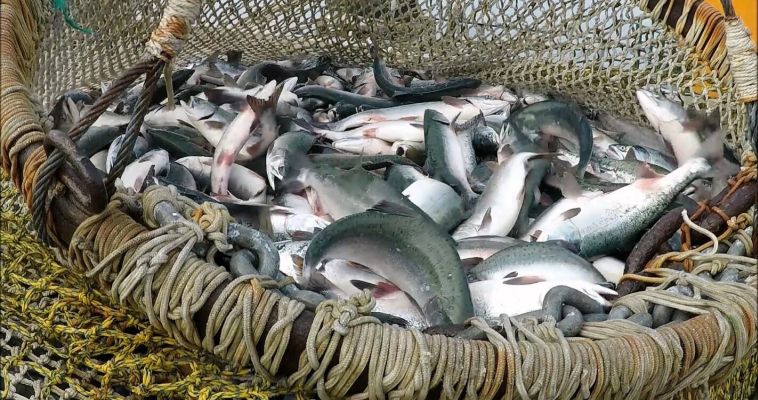
Salmon catches in Chukotka have significantly surpassed previous years' records, with a notable increase of 64.5% compared to 2023, highlighting an unexpected abundance in the region's fishery.
AI Comment from GPT 4.1:
Recent reports indicate that salmon catches in Chukotka are significantly higher than in previous years, with the Meynypilgynskaya lake-river system showing particularly strong returns of sockeye (
нерка). This contrasts sharply with previous observations of declining salmon stocks and harvest restrictions in the region.> For context, in recent years, there have been widespread concerns about the sustainability of salmon fisheries in Chukotka. Past observations, such as "Record salmon harvest closures in Chukotka" and "A temporary ban on salmon fishing was introduced in Chukotka", documented restrictions and outright bans on salmon fishing due to low returns to spawning grounds and an overall drastic decline in salmon abundance. Reports such as "Salmon fishing in Chukotka sets anti-records" and "Salmon production in the region has decreased by 11 times" also reflected record-low catches and harvests well below those in previous years. This trend led to discussions about suspending commercial fisheries, as highlighted in "Due to the low returns to spawning grounds, commercial salmon fisheries may be suspended next year".> However, earlier this season, increased catch quotas were authorized, as noted in "Over 660 tons of salmon were allowed to be caught by the indigenous people of Chukotka", reflecting a cautiously optimistic outlook for 2025 with a 29% higher recommended catch than last year. Despite this, some species, particularly pink salmon, were still expected to have lower returns due to factors such as climate warming (source). > The current observation, documenting a strong start to the 2025 fishing season, especially for sockeye salmon in certain systems, represents a notable change from the generally negative trend of previous years. It remains to be seen whether this positive pattern will continue and what factors may be contributing to these improved numbers.
 Observations From Members