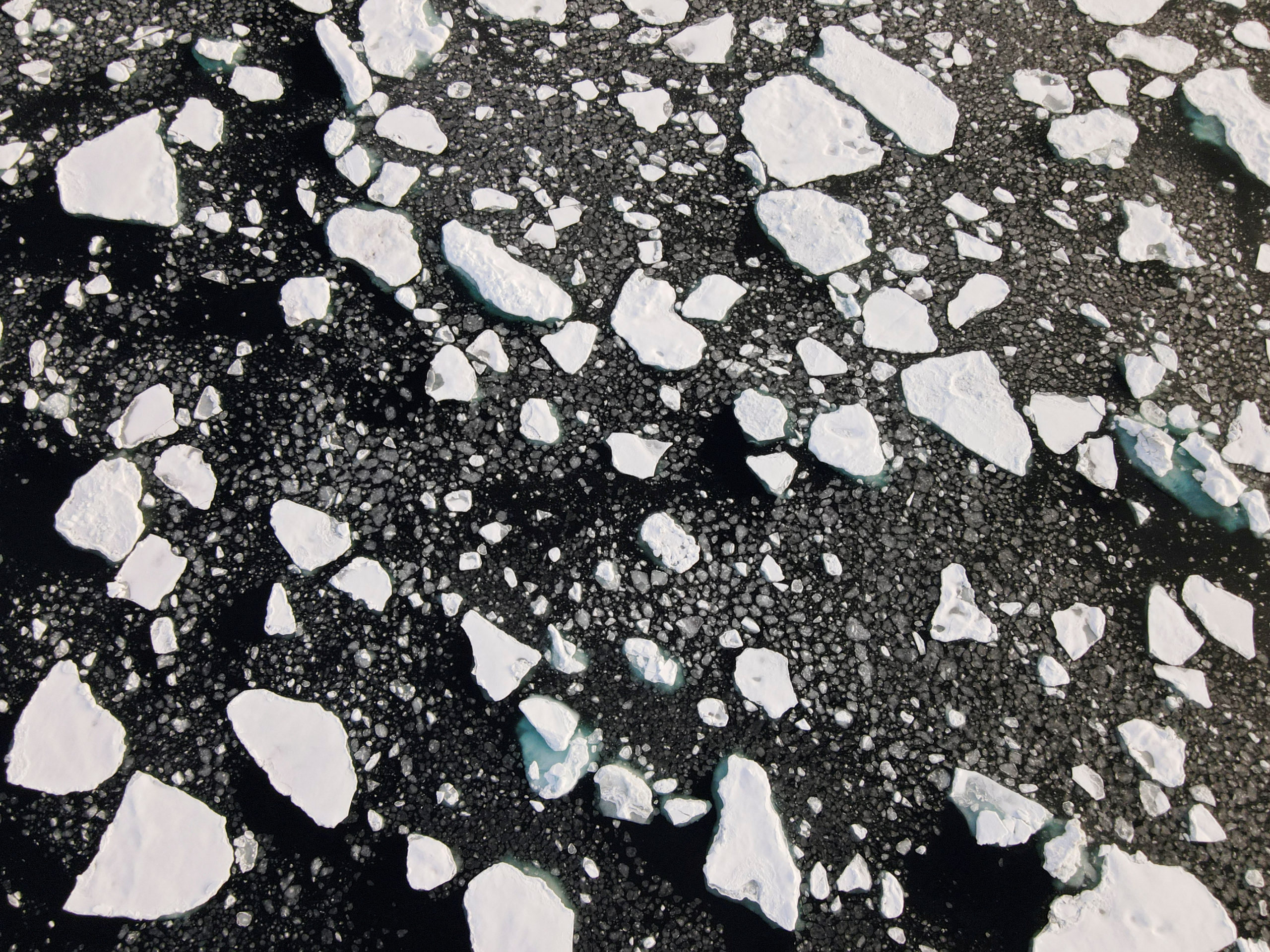
A new study has found that atmospheric rivers are hitting the Arctic more frequently, leading to increased melting of sea ice. Atmospheric rivers are strong moisture transports that release heat as water vapor turns into rainfall, warming the atmosphere and preventing heat from escaping into space. Scientists have established a statistical link between the amount of ice lost and the average count of atmospheric rivers that arrived, finding that about 34% of the ice decline from 1979 to 2021 in the Barents-Kara Seas and central Arctic can be attributed to the increased frequency of atmospheric rivers. Other studies have also described increases in atmospheric rivers affecting ice loss on a global scale.
|
|
Arctic |
 Observations From Members